
Whether a person has curly hair or a cow has large muscles may seem random so scientists started keeping track of heritable traits with pedigree charts.
- Jim & Zena have a lot of PHENOTYPES which are also known as observable characteristics.
- In order to figure out if each of these traits is heritable or acquired, we can make a pedigree chart.
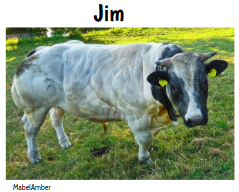
- Has horns
- Mostly white with some black fur
- Huge muscles
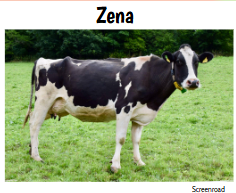
- No horns
- Even mix of black and white fur
- Typical muscles
- PEDIGREE CHARTS help scientists to follow phenotypes (trait variations) of one trait through several generations to find patterns of inheritance.
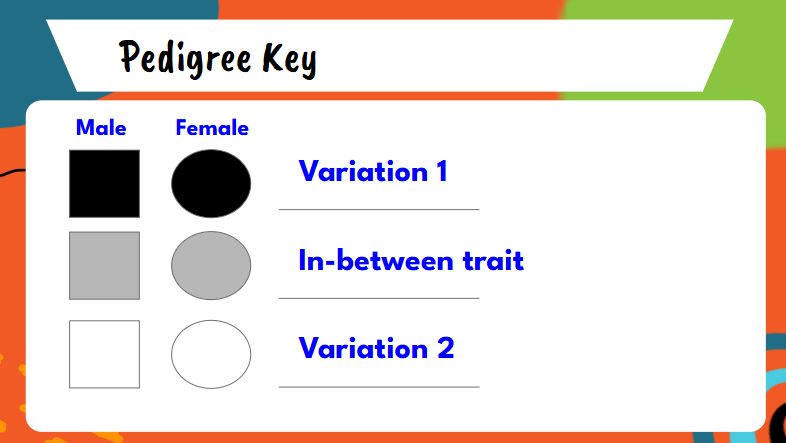
- Males and females are represented with squares and circles respectively.
- The shading of the shapes denotes what trait each individual has.
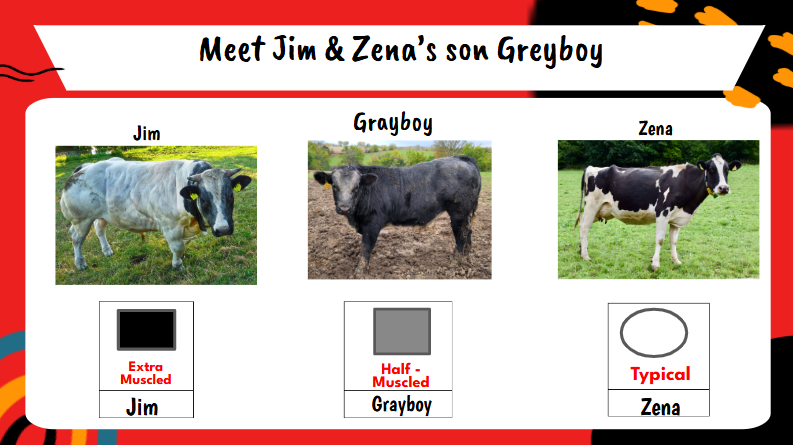
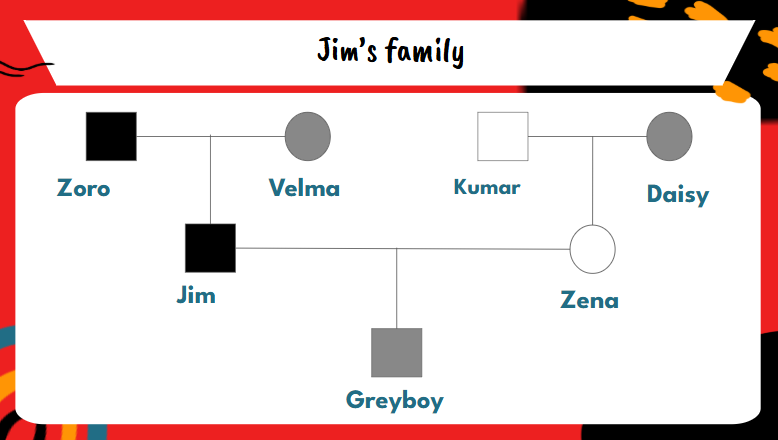
What patterns do we see when we look at Jim’s family pedigree?
- While there does appear to be a slight pattern that traits don’t just come from nowhere, let’s analyze some more family examples to really figure out what is going on with this cow musculature!
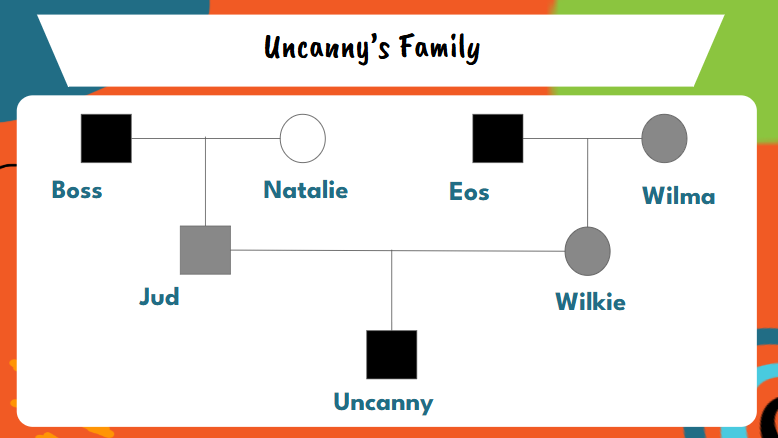
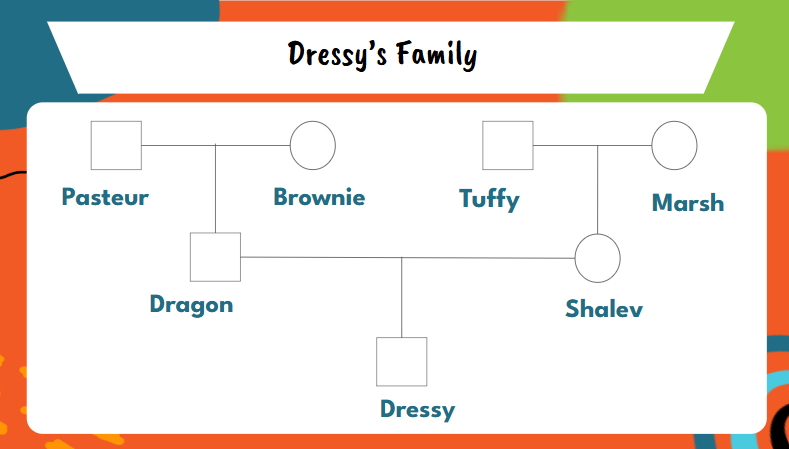
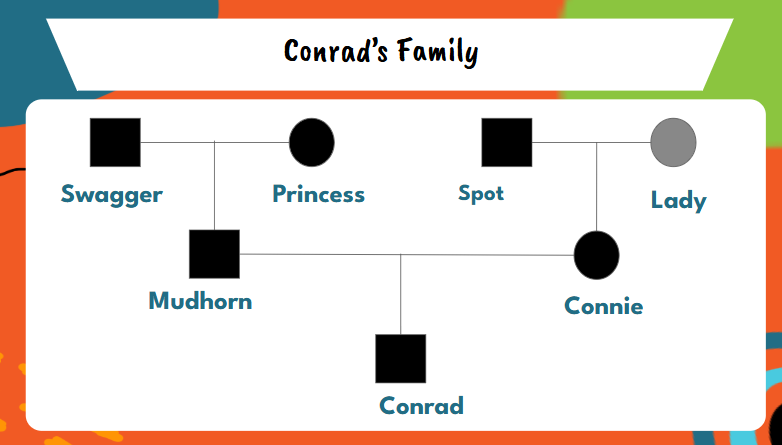
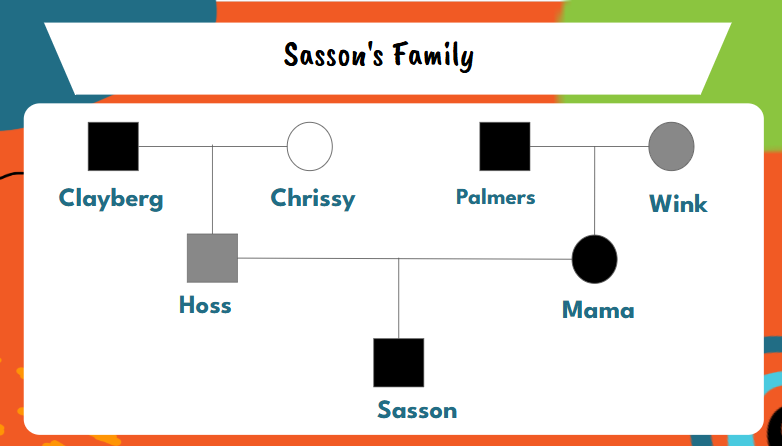
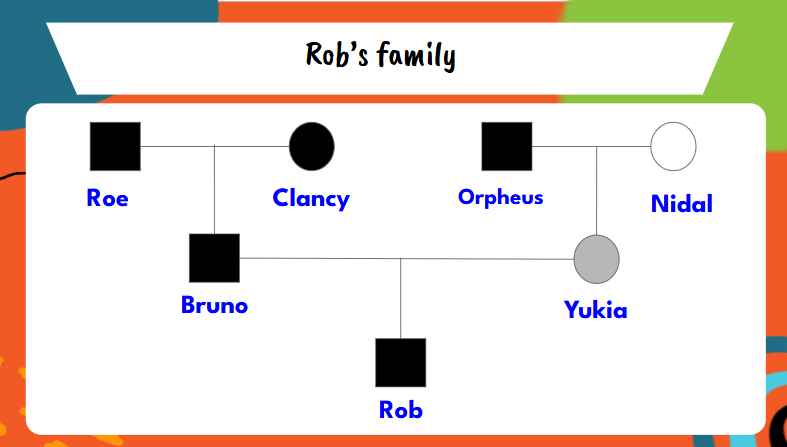
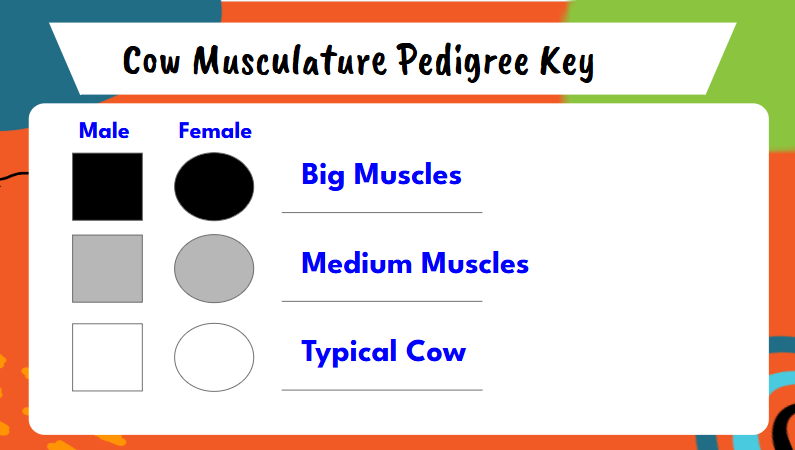
Patterns in Cow Pedigrees
Big Muscled Cows
- have at least one big muscle parent
- can have offspring with big or medium muscles
- never have parent or offspring with typical muscles
Medium Muscled Cows
- Can have any muscled parents or offspring
Typical Cows
- have at least one typical parent
- can have offspring with typical or medium muscles
- never have parent or offspring with big muscles
After years of collecting data on inheritance, scientists realized that there are two versions of cow muscle information that can be inherited.
- ALLELES are different versions of a trait that can be inherited.
- Every cow gets one allele from each parent and we represent the different forms with capital and lowercase letters.
- For cow muscles:
- Capital E represents big muscles
- Lowercase e represents typical muscles
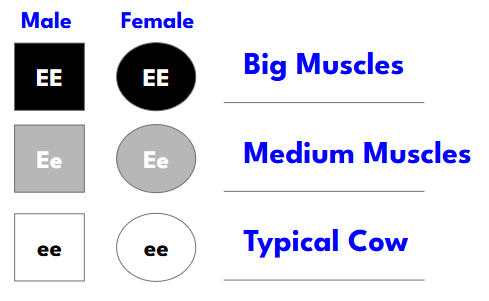
- Using these letters, the patterns become clear!
- Jim got one E from each parent giving him EE for big muscles.
- Zena got one e from each parent giving her ee for typical muscles.
- Greyboy got his E from Jim and his e from Zena giving him Ee for medium muscles.
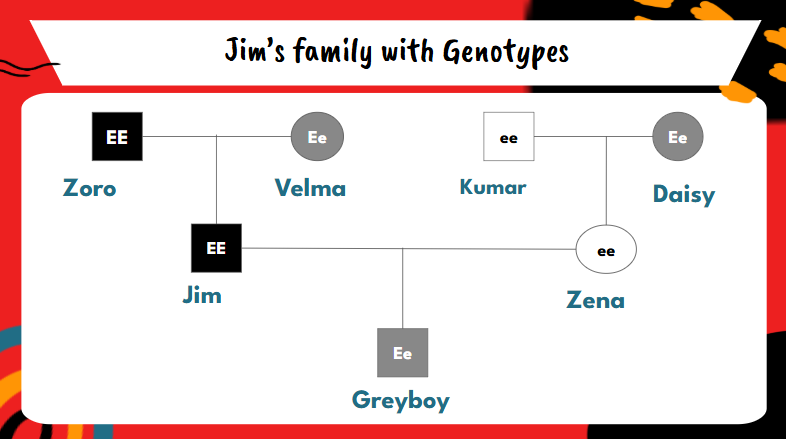
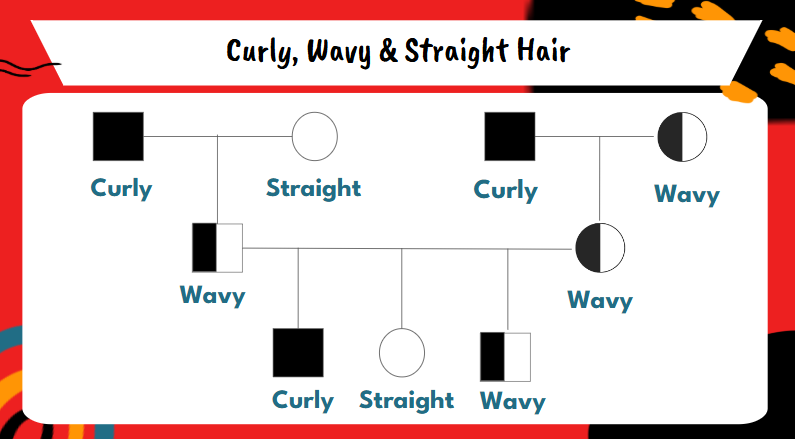
While a simplified explanation, this pedigree shows how hair types can be inherited.
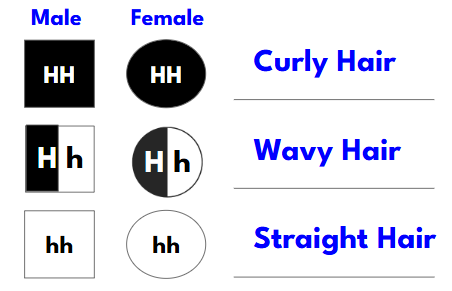
- Notice that Curly haired HH parents only have H to give so their child will always have at least one H.
- If a child gets another H from parent 2, they will have curly hair. If they get h from parent 2 they will have wavy hair.
HOW EXACTLY DO ANIMALS PASS ON THEIR HERITABLE TRAITS?
CLICK ON THE SEXUAL REPRODUCTION BUTTON BELOW!
What’s next?
I’m lost😱
Unclear on some vocabulary, click the buttons below for some foundation:
I need practice🤔
I think I get it, but would like some more practice!
Let’s move on👍
How do animals store and pass on their heritable traits?