
While humans have been burning wood and coal to heat our homes and cook our food for millennia, the invention of the Combustion Engine in 1860 changed the energy game for humans and the planet.
- As the molecules in the coal, oil or gas rearrange during a combustion reaction with Oxygen, the chemical potential energy in each fuel is transferred to heat and light energy.
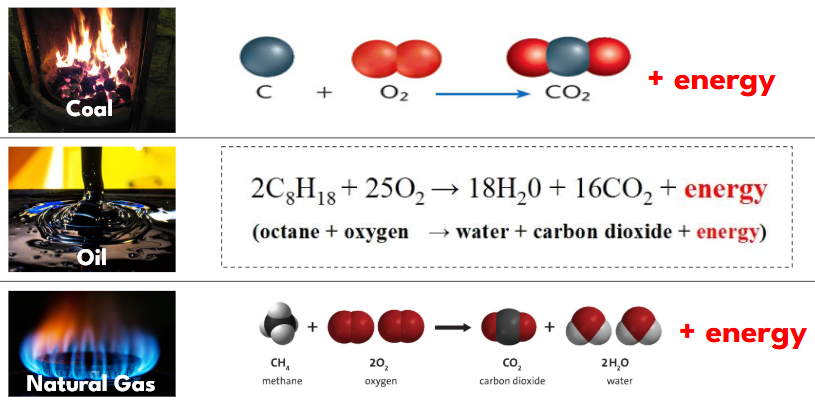
All fossil fuels can be burned in a powerplant to heat water that will spin a generator make electricity. In addition:
- Coal and natural gas are often burned in furnaces to heat homes.
- Petroleum fuels and natural gas can fuel engines for transportation.
- Have you ever noticed little speck floating in a beam of light? Well those were visible particles floating in the air.
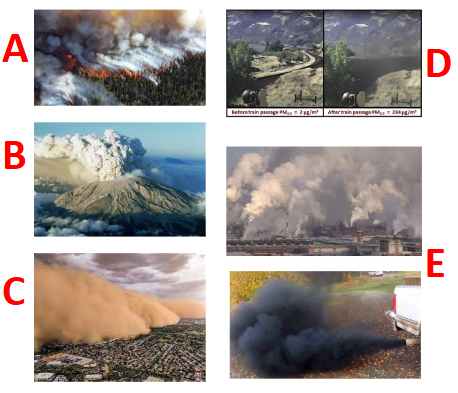
- Sources include:
- A. Soot from forest fires
- B. Ash from volcanoes
- C. Dust and pollen
- D. Coal dust from trains
- E. Soot from engines and factories burning fossil fuels
- Effects of visible air pollution:
- Minimal long term impact on environment
- Usually fall to ground due to size
- Can cause respiratory issues to humans
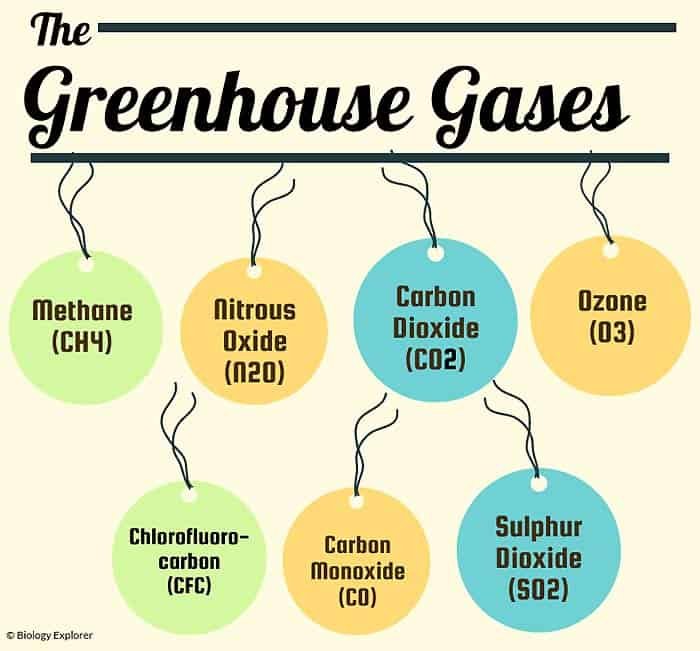
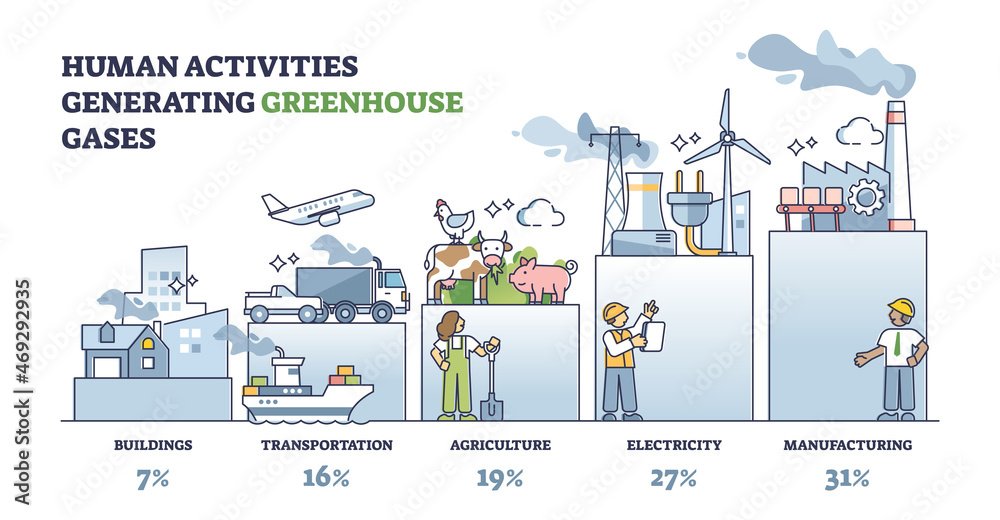
- GREENHOUSE GASES are too small to see with our eyes, but wildly important the function of our planet!
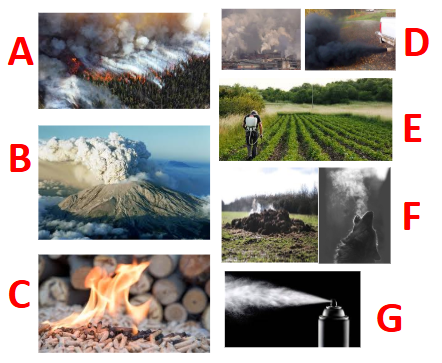
- Sources include:
- A. Forest fires
- B. Volcanoes
- C. Burning biomass
- D. Burning fossil fuels in engines and factories
- E. Fertilizer use
- F. Animal digestion and respiration
- G. Aerosol chemicals
- Greenhouse gases are lopsided molecules that trap heat. While they are naturally occuring on Earth, fossil fuel use has increased the amount of all of them.
2. They act like a blanket at night keeping the planet warm and a shade during the day, blocking some of the heat that tries to get in.
- Too much – planet gets very warm
- Too little or none at all – planet gets very cold.
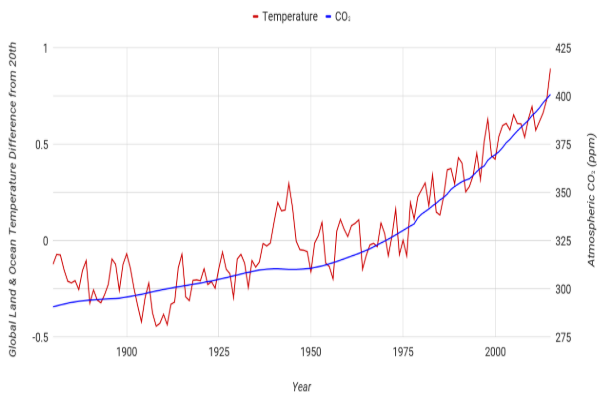
This popular graph shows the positive correlation between the average yearly temperature recorded since 1880 and CO2 levels in the atmosphere. Since the invention of the combustion engine
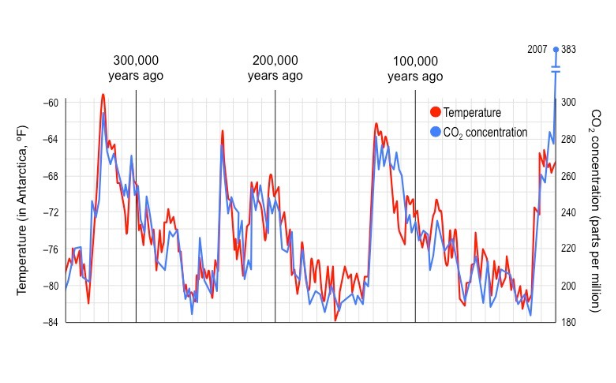
This graph shows how temperature and CO2 levels have increased and decreased together for over 300,000 years based on ice core evidence.
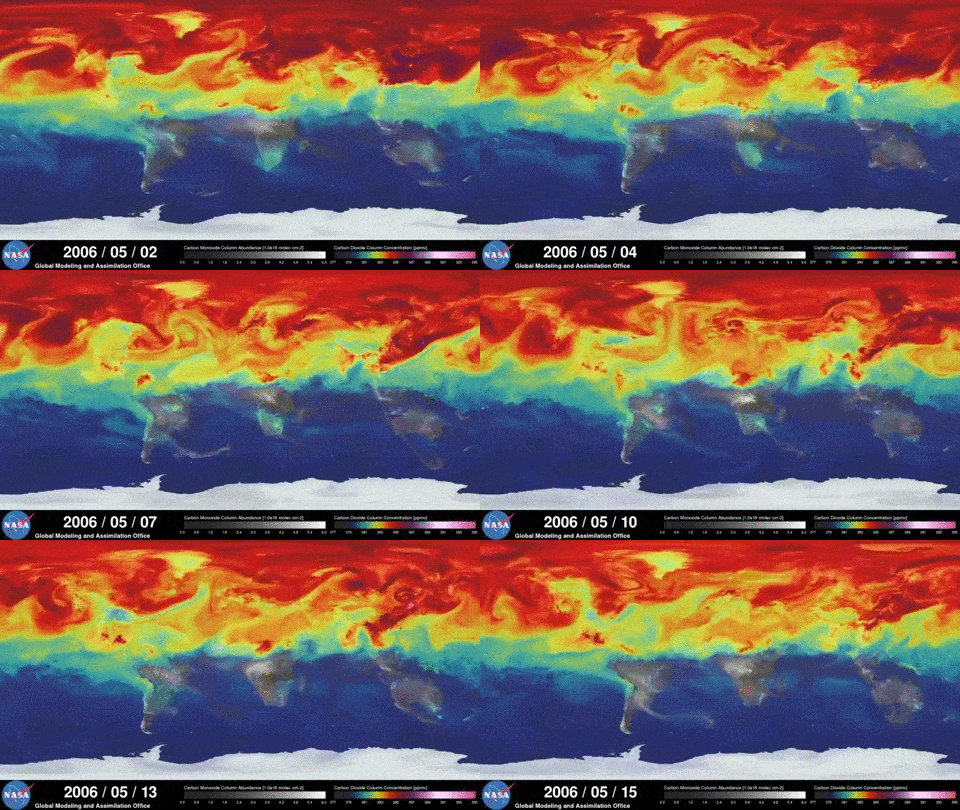
Seasonal human activities emit CO2 at different times across the globe.
Plants are the biggest modifier of Carbon Dioxide!
- In the video above, notice how CO2 builds during northern hemisphere’s winter while plants are dormant.
- CO2 levels drop drastically when the land plant photosynthesis is active spring – fall.
Do humans need to change our behavior?
What’s next?
I’m lost😱
I need some background information:
I need practice 🤔
I still need to explore the other Fossil Fuels:
Let’s move on👍
I understand greenhouse gases, how else do Fossil Fuels impact the environment?