
As far as we know, humans have only ever lived on Earth. So all of our systems are perfectly attuned for survival here. So what happens when we spend time in different gravity than our own?
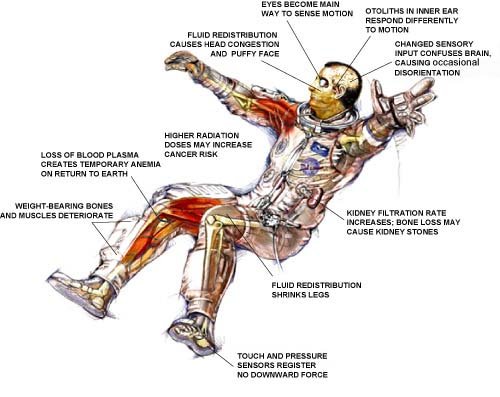
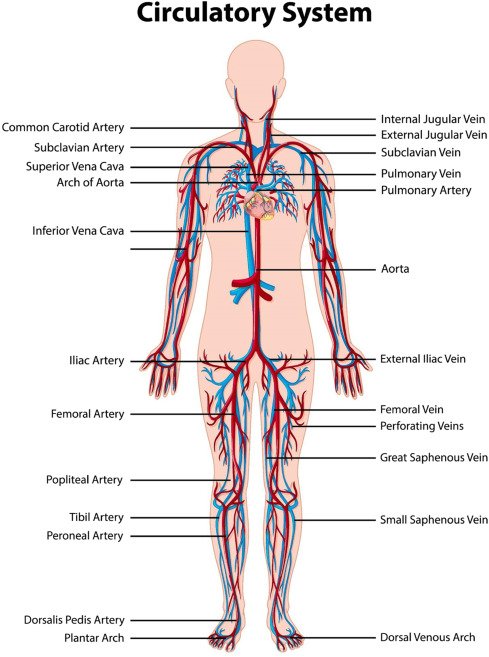
Our cardiovascular system is composed of our HEART which pumps BLOOD to our LUNGS for oxygen then through VESSEL that deliver the oxygen around our body.
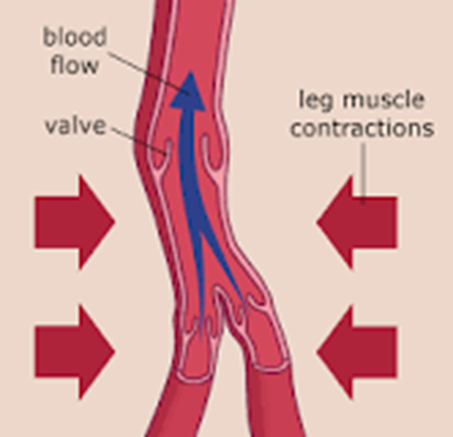
- Blood is pulled downward by gravity from our heart until it reaches our feet and hands. Then on the way back up, little valves are pushed open with each heartbeat and close in-between to help blood return against gravity to the heart.
- These same valves exist to help blood move against gravity up to our brain and then blood just falls back to our heart and lungs to be pushed around again.
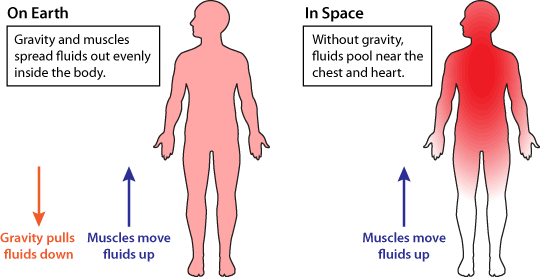
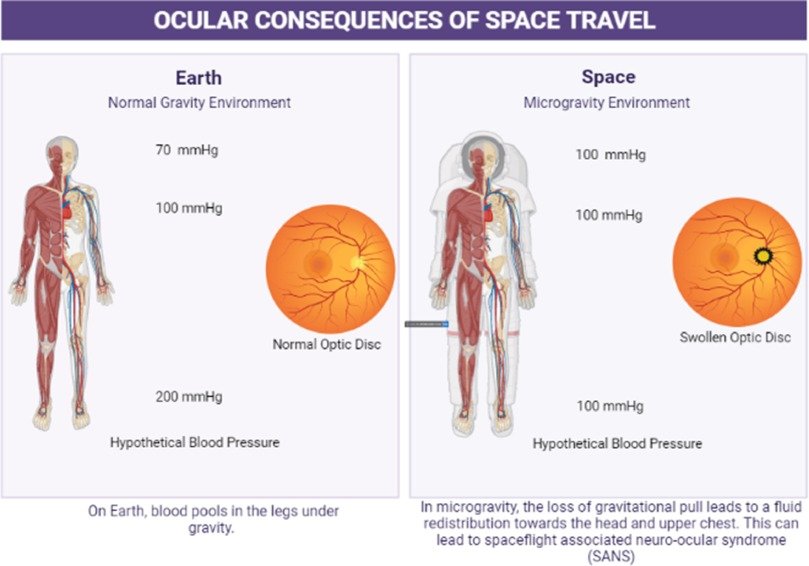
- Without gravity, circulation slows because blood doesn’t fall down to our hands and feet.
- Blood must be pushed with each heartbeat which slows down circulation.
- This also leads to blood getting “stuck” in the upper part of the body leading to a swollen look in astronauts.
Our digestive system starts in our MOUTH when we take a bite and chew our food. When we swallow the bite, the food travels down the ESOPHAGUS into the STOMACH where it is chemically reacted into small molecular pieces. These nutrients are absorbed in the INTESTINES and any unusable waste comes out as poop.
- Have you ever tried to eat or drink upside down? I don’t recommend it.
- Gravity plays a pivotal role in helping food travel from our mouth and down into our stomach.
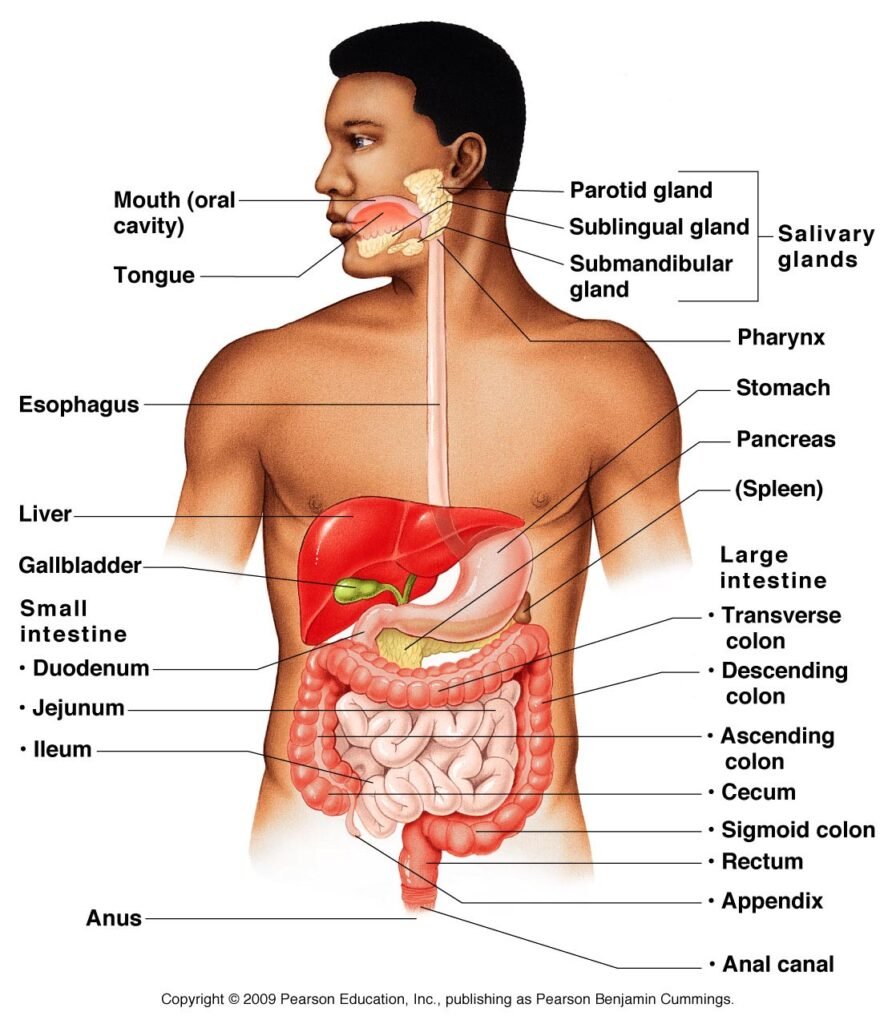
- Without gravity, digestion slows because food isn’t pulled down through the system as effectively.
- Chewing and swallowing are more difficult.
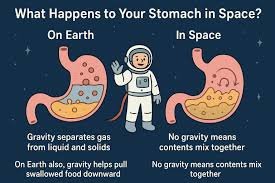
- Without gravity to separate less dense liquids and gases, burping is not possible so astronauts feel more gassy.
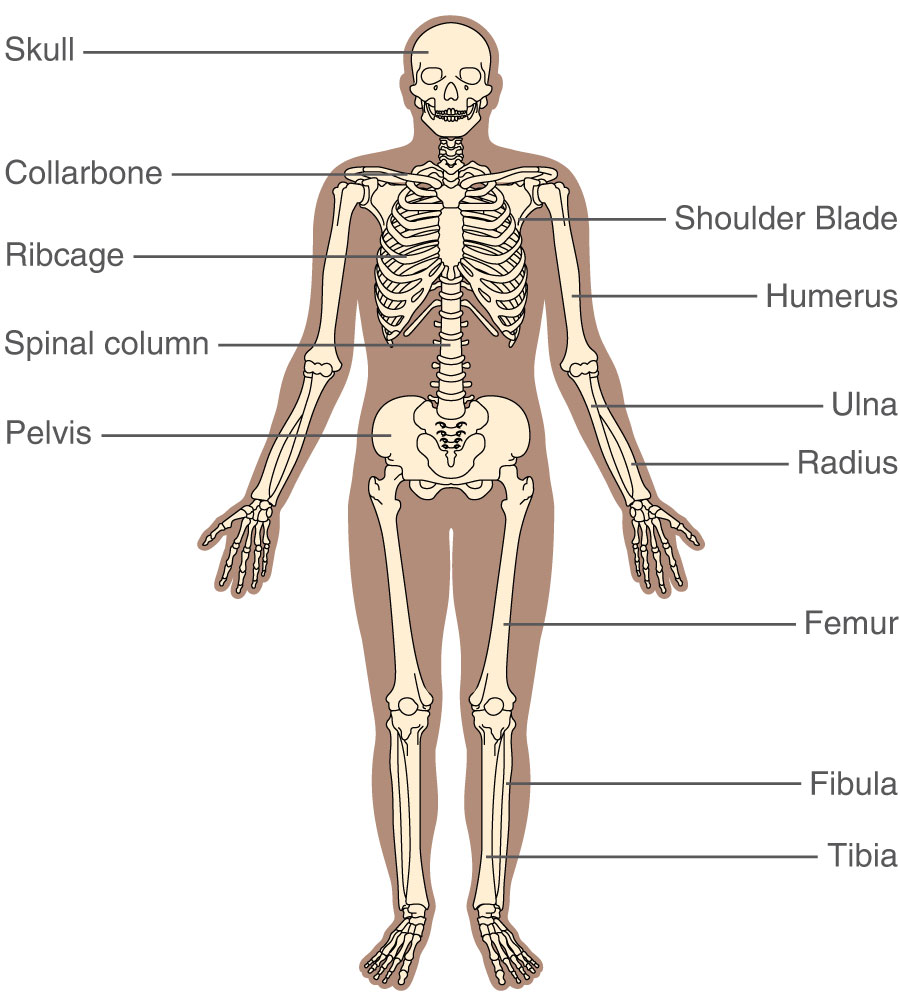
Our skeletal system is composed of 206 BONES that hold up our muscles, organs and skin. In addition, the some bones are responsible for making new blood cells in their marrow.
- Our skeleton’s main job is to hold everything in our body up from the downward force of gravity.
- Every time we move, lift and jump, we send signals to our skeleton to add more calcium so our bones don’t break under the force of gravity.
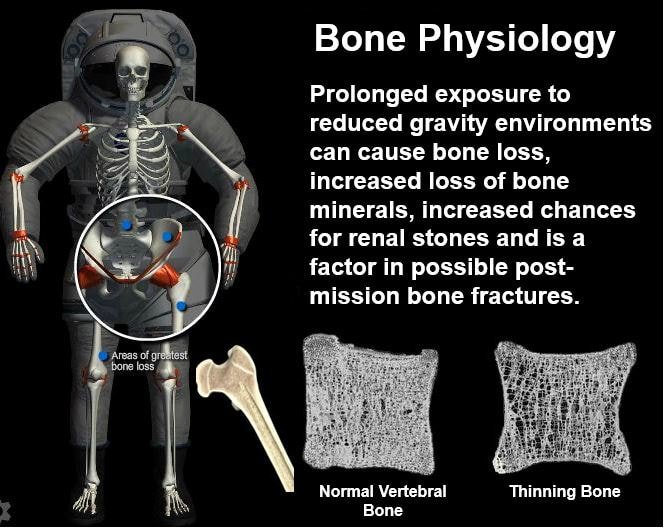
- Keeping our bones strong and full of calcium takes a lot of work, so when we are inactive or there is less gravity from space travel, our bones weaken.
- As our bones let go of the calcium so it can be used somewhere else in the body, small holes form in the thinning bone which we call Osteoporosis.
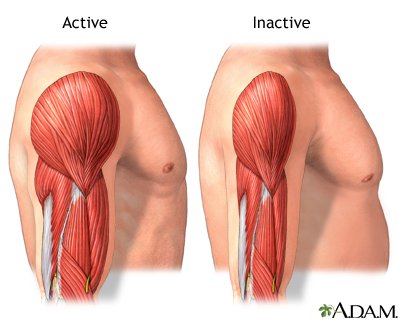
Our muscular system is composed of over 600 MUSCLES which attach to our bones so we can move them.
- Muscles work with the skeleton to hold and move everything in our body against the downward force of gravity.
- Every time we move, lift and jump, we send signals to our muscles to add proteins to our muscles so we can continue to work against gravity.
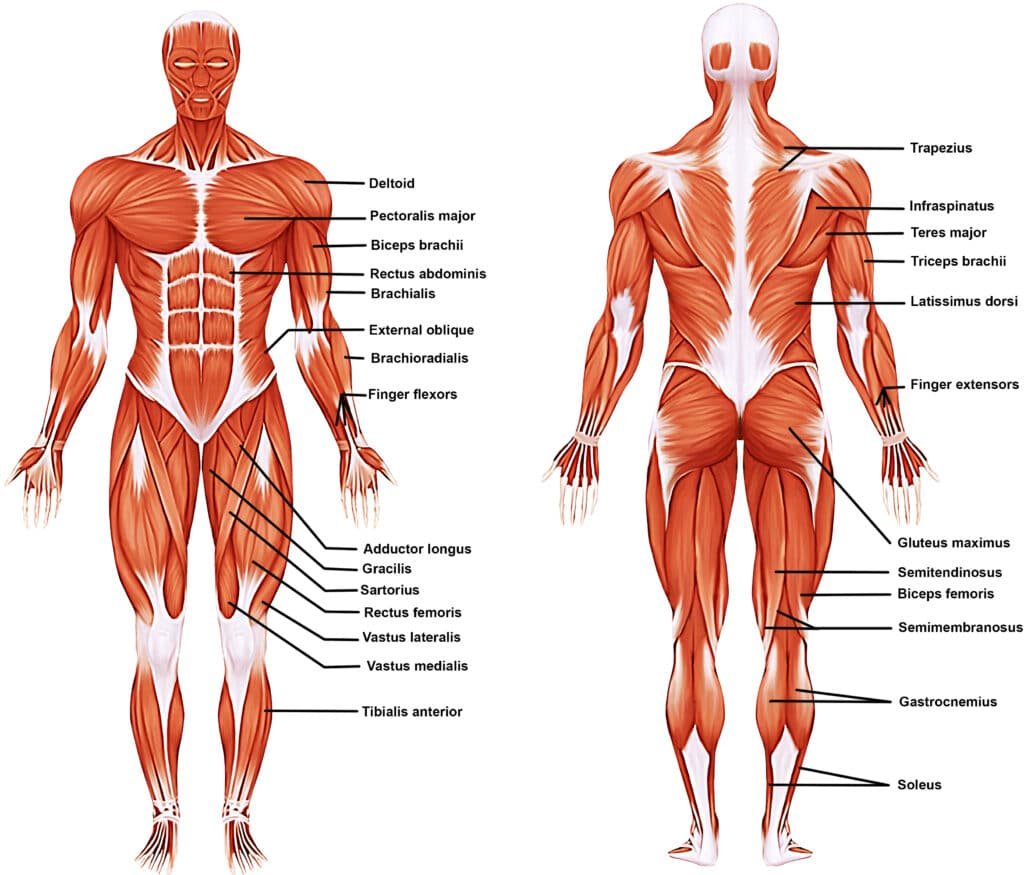
- Keeping our muscles strong and full of protein takes a lot of work, so when we are inactive or experience less gravitational force in space, our muscles weaken.
- As our bones let go of the proteins so they can be used somewhere else in the body, muscles shrink in a phenomena we call atrophy.
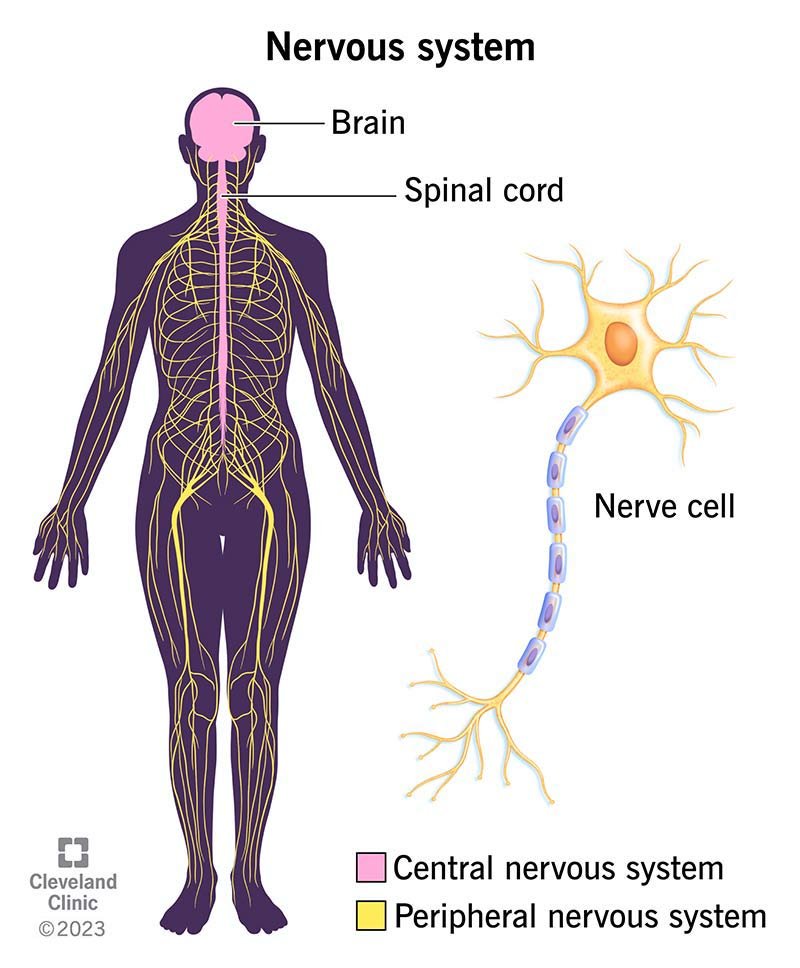
Our nervous system is composed of roughly 45 miles of NERVE FIBERS that send signals to and from the BRAIN.
- Every body part is connected to the brain by nerves.
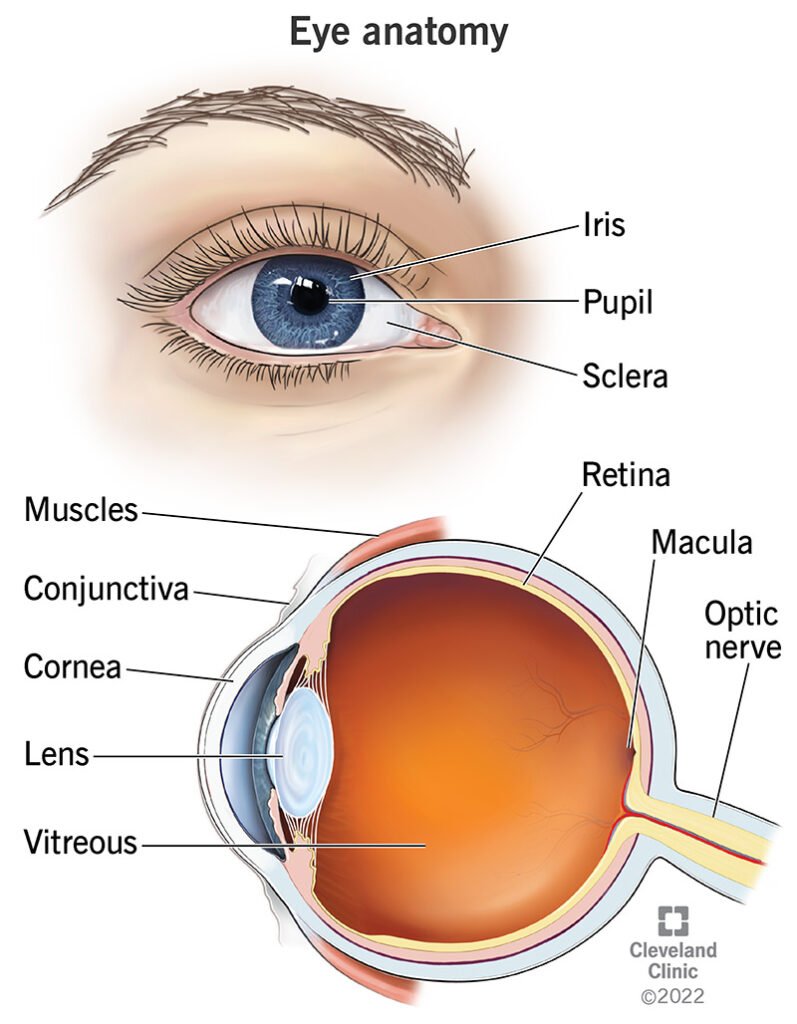
- For example, the eye focuses light on the retina in the back and the optic nerve carries the information to the brain. Gravity pulls on the fluid in the eye maintaining its shape.
- General nerve signals seem largely unaffected without gravity.
- However, without gravity, the fluid filled center of the eye deforms and puts pressure on the optic nerve so most astronauts experience blurry vision during their time in space.
Part of the inner ear, the vestibular system is composed of 3 CIRCULAR TUBES at different angles with fluid. This fluid settles in the bottom of each canal giving our brain a sense of up and down.
- Fluid is pulled downward in each of the 3 tubes giving our brain a signal of up and down.
- When we tilt, rotate or spin our head, the fluid moves to a new place in the tubes telling our brain what motion is happening.
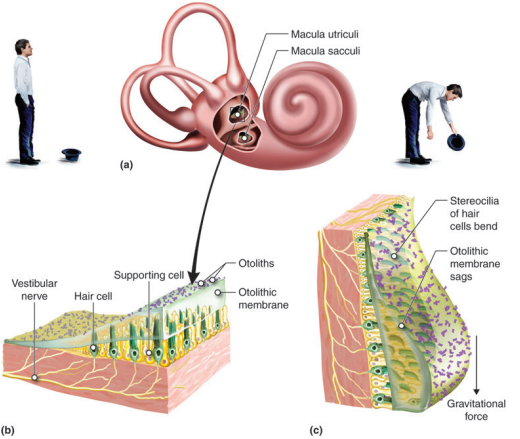
- Without gravity to pull the fluid down, it just floats around in the tubes, randomly bouncing into the sensory hairs.
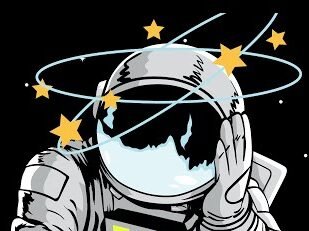
- This confuses the brain with a feeling similar to being constantly dizzy leading to feelings of nausea and unwell by astronauts.
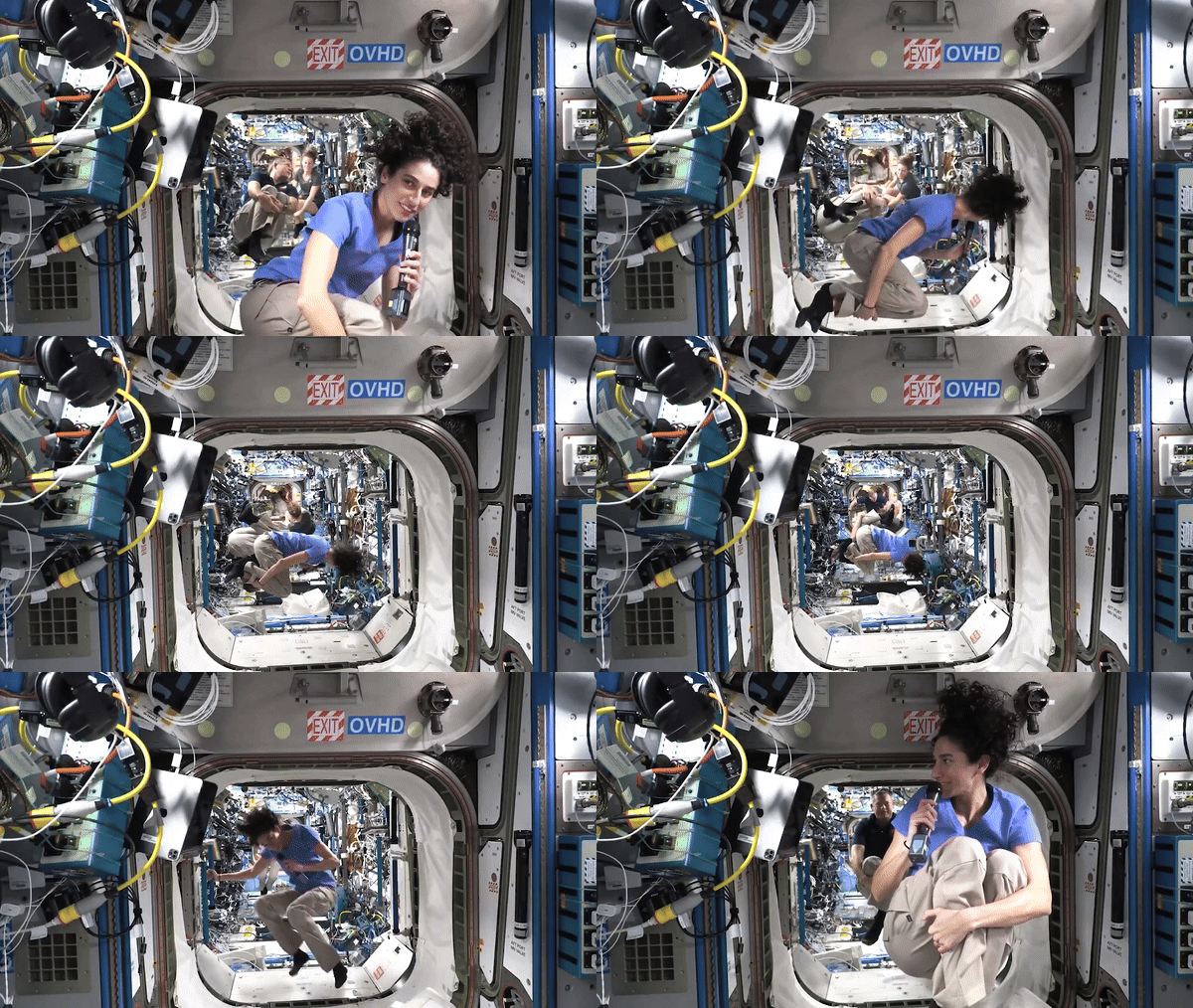
- Short answer? Lots of work
- They have to do months of physical therapy to rebuild their systems for Earth’s gravity.
- And the longer they are in space, the longer the process takes.
Could Humans survive prolonged space travel?
If we ever get to another planet, could we even come back?
What’s next?
I’m lost😱
I need some background information:
I need practice 🤔
This is a lot of vocab and concepts!
Let’s move on👍
How could we actually live on another planet?